

Rail Freight Group urges MPs to safeguard freight in Railways Bill
Posted: 10 December 2025 | Global Railway Review | No comments yet
Rail Freight Group has told MPs that urgent amendments are needed to the Railways Bill 2025 to secure freight growth and competitiveness.
Rail Freight Group (RFG) has urged parliamentarians to back rail freight interests as the Railways Bill 2025 reached its second reading in the House of Commons on 9 December. The organisation said the legislation represents a pivotal moment for the sector, which contributes around £2.5 billion annually to the UK economy and supports nationwide supply chains.
RFG Director General, Maggie Simpson OBE, said: “The success of Great British Railways will depend not on the colour of its logo but on how it supports customers, and enables more goods to move by rail. By making some small changes to the Railways Bill, parliamentarians can help us ensure that the future of our railways works effectively for all users.”
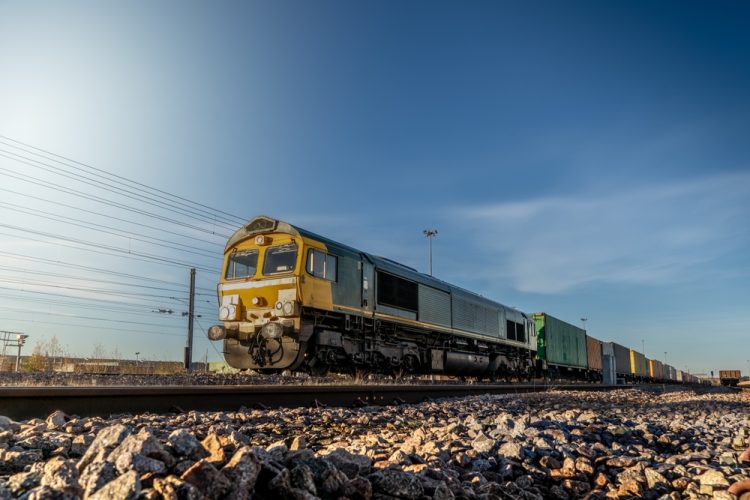
Freight trains carry millions of tonnes of construction materials, retail products and energy fuels each year, removing approximately 75 heavy goods vehicles from the road per service. According to RFG, maintaining and expanding this role is essential to reducing congestion and road maintenance costs while providing reliable logistics capacity for major industries.
The Bill includes provisions strongly welcomed by the group, notably a statutory duty on Government to promote rail freight and a legal requirement for Great British Railways (GBR) to factor in the Rail Freight Growth Target of at least 75% growth by 2050. RFG also welcomed continued use of wear-and-tear-based charging structures, incentive regimes to encourage high performance from operators and GBR, and discounts to help stimulate new freight flows and use spare capacity.
However, RFG has told MPs it has significant concerns about future track capacity allocation. The briefing note highlights what the organisation sees as a weakening of regulatory independence, fearing that GBR could be allowed to set and judge access rules without external oversight.
RFG warned that the demise of the current rail regulator risks undermining decades of progress in route development, competition and performance improvement. The organisation is particularly concerned that GBR could “mark its own work” when deciding or appealing access decisions, and could potentially favour operators within its control over independent freight businesses.
Its briefing also questions whether Government or GBR would act as the industry’s guiding mind, given proposed new powers for the Secretary of State to direct or overrule decisions. Additional concerns relate to Government intervention in infrastructure not owned by the state or GBR.
The group warns MPs that these measures could “deprioritise freight, increase costs to a level which make rail freight uneconomic versus HGV costs, deprive the rail industry of a regulator which acts as an independent mind with a record for growth and lead to uncertainty and duplication as to which of GBR or Government is the guiding mind.”
Want insight into how rail freight is transforming to meet modern logistics demands?
Our latest Track Insight, Unlocking the Future of Freight, brings together senior voices from across the sector to explore real-world innovations already improving reliability, competitiveness and sustainability, from AI-driven operations to smarter track maintenance strategies.
Track Insight Report: Unlocking the Future of Freight
Global Railway Review Autumn/ Winter Issue 2025
Welcome to 2025’s Autumn/ Winter issue of Global Railway Review!
The dynamism of our sector has never been more apparent, driven by technological leaps, evolving societal demands, and an urgent global imperative for sustainable solutions.
>>> Read the issue in full now! <<<
Related topics
Cargo, Freight & Heavy-Haul, Freight, Funding & Finance, Infrastructure Developments, Operational Performance, Reform, Regulation & Legislation, Sustainability/Decarbonisation, The Supply Chain