
As battery trains move from pilot to backbone, the rail industry is abandoning the “electrify everything” mindset. With material costs rising and grid resilience under pressure, 2026 marks the point where discontinuous electrification finally aligns commercial reality with proven technology.
The transition from ‘electrify everything’ to a mix of static charging infrastructure and battery traction has matured from trial to standard operation. As the industry prepares for the next phase of decarbonisation, we analyse why 2026 is the year the business case finally aligns with the technology.
For the best part of a decade, the global rail industry has been locked in a circular debate regarding decarbonisation. On one side, the purists arguing for total network electrification; on the other, the pragmatists pointing to the prohibitive capital costs of stringing catenary over every kilometre of regional track. As operations settle into 2026, it appears the market has finally chosen a winner.
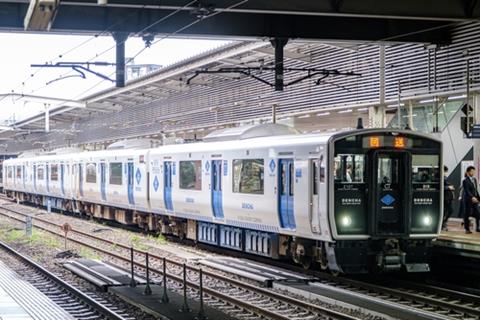
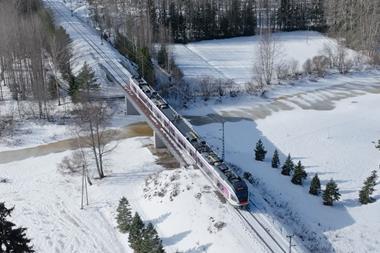
The era of ‘electrify everything’ has yielded to the era of discontinuous electrification. This shift is no longer theoretical. As recent procurement strategies from Germany to the UK demonstrate, the combination of static infrastructure and dynamic rolling stock, specifically Battery Electric Multiple Units (BEMUs), has matured from a pilot concept into the standard operating model for regional rail.
With the industry now specifically targeting the closing of electrification gaps, it is timely to examine why 2026 is emerging as the tipping point at which ‘bridging the gap’ moves from metaphor to procurement strategy.
The end of the ‘all-or-nothing’ fallacy
The traditional barrier to decarbonising regional lines has always been the business case. The cost per kilometre to electrify low-density routes often collapses under scrutiny when compared to the operational flexibility of diesel. However, the last 12 months have provided the data needed to move beyond the traditional diesel-only operational model, without demanding the treasury-draining commitment of full wiring.
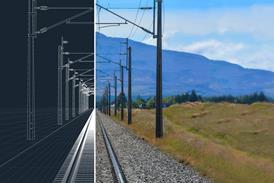
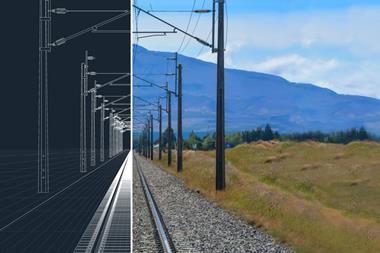
The solution lies in ‘island’ or discontinuous electrification, installing overhead line equipment (OLE) only where it is economical (stations, flat sections) and relying on battery traction for complex infrastructure like tunnels or heritage areas.
Significant momentum has gathered behind this approach in the UK. The East West Rail Company has solidified its strategy for "partial-discontinuous electrification" for the Oxford-Cambridge corridor. Rather than delaying the project to fund full wiring, the line is set to utilise hybrid battery-electric trains, charging under intermittent wires and running on battery power through difficult sections. This decision, backed by the UK Government’s confirmed £2.5bn funding commitment in November 2025, effectively codifies discontinuous electrification as a primary tool for major infrastructure delivery.
The economic and geopolitical drivers
This shift is not defined by technical drivers alone; it is a response to a new economic reality. The ‘wires everywhere’ model relied on stable material costs and predictable civil engineering budgets – luxuries that the 2026 climate of territorial conflict and the unpredictable issuance of punitive tariffs will not afford.
With global copper demand surging due to the competing needs of data centres and automotive manufacturing, the capital cost of full electrification has decoupled from standard inflation. Asset managers are no longer asking "how much to wire this line?" but "can we secure the materials to finish it?"
Furthermore, the conversation has moved to resilience. Grid volatility and extreme weather events are on the increase, rendering a pure electric fleet as vulnerable. A battery-equipped fleet offers essential operational resilience. If the overhead supply is lost due to a storm or grid failure, a BEMU fleet does not become stranded; it retains the autonomy to clear the line or complete the service.
This makes discontinuous electrification not a ‘stop-gap’ for the short term, but a strategic end-state for the long term. It delivers decarbonisation without exposing the operator to the spiralling costs of civil works or the operational fragility of a 100% tethered fleet.
From pilot to backbone: the BEMU fleet
This infrastructure strategy is only viable because rolling stock capability has caught up. If 2024 was the year of the pilot, 2025 was the year of the fleet order.
Major manufacturers have moved substantial orders from the books to the tracks. Siemens Mobility has continued to secure orders for the Mireo Plus B battery-powered trains, most notably the landmark order for 61 units for the Northern Westphalia Network signed in December 2025. This follows successful deployments in regions such as Netz Ortenau, where battery fleets are already proving their reliability in daily service.
The crucial detail here is the replacement cycle: these are not trials; they are direct replacements for aging fossil-fuelled fleets engaging timelines that demand immediate reliability. Similarly, Stadler continues to gain traction with the FLIRT Akku. With framework orders from operators like the Austrian Federal Railways (ÖBB) moving toward delivery to decarbonise lines such as the Kamptalbahn by 2028, the battery train has firmly exited the ‘experimental’ phase.
Range anxiety vs grid reality
Technology has matured faster than many anticipated. The benchmark set by Great Western Railway (GWR) in August 2025, achieving a verified 200-mile (320km) journey on a single charge, demonstrated that range is rarely the primary limiting factor for regional branch lines anymore.
However, the challenge for 2026 is shifting from the vehicle to the grid. Discontinuous electrification requires robust grid connections at specific intervals. ‘Fast charging’ islands, capable of delivering the high-amperage bursts needed for rapid turnarounds, impose significant demands on local power distribution.
The bottleneck for technical directors and asset managers is no longer selecting the train, but securing the grid capacity to charge it during a short turnaround at a rural terminus. This operational complexity is a key driver behind our upcoming coverage on smart energy management.
Video credit: Geoff Marshall (@geofftech2), via YouTube
Heavy haul: the dual-mode reality
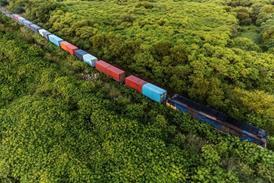
Where does this leave freight? A few years ago, the industry discussion often framed the future of heavy haul as a binary choice between diesel and ‘wires everywhere’. In 2026, the market has rejected both in favour of flexible traction.
While BEMUs have conquered the regional passenger market, freight requires higher energy density. In the immediate term, this is being solved by dual-mode locomotives that maximise the use of existing infrastructure.
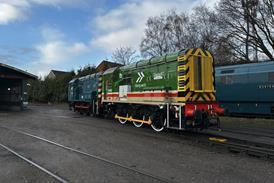
A prime example is the Siemens Vectron Dual Mode, which recently gained cross-border approval for operation between Germany and Austria. As demonstrated by the first units handed over to Stern & Hafferl Verkehr, these locomotives allow operators to run emission-free under overhead lines and switch seamlessly to diesel for last-mile non-electrified sections. This validates the discontinuous electrification model: operators no longer need to wait for 100% wiring to decarbonise the majority of their route.
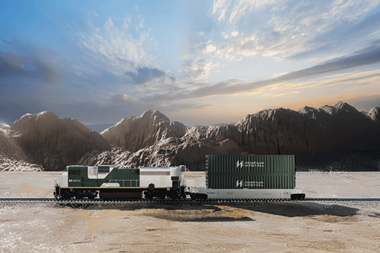
Looking further ahead, hydrogen is carving out its essential niche for long-distance, heavy-haul lines where catenary is non-existent. In North America, CPKC continues to lead this segment. Following successful tests in British Columbia, the deployment of high-horsepower hydrogen locomotives for heavy-haul freight demonstrates the future taxonomy of rail traction: wires where possible, batteries where practical, and hydrogen where the distances and loads demand it.
The verdict for 2026
Ultimately, this shift is driven less by engineering preference than by economic necessity. In a landscape constrained by volatile supply chains and grid insecurity, the ideology of ‘wires everywhere’ has become a luxury the industry can no longer afford. Discontinuous electrification has graduated from a technical compromise to a strategic imperative; it is the only operational model resilient enough to deliver decarbonisation within the hostile commercial climate of 2026.
Topics
- Alternative traction pathways
- Austria
- Canadian Pacific Kansas City (CPKC)
- Civils & structures
- Electrification & traction power infrastructure
- Germany
- Great Western Railway (GWR)
- Net zero strategy & reporting
- Net zero strategy & reporting
- North America
- Siemens
- Siemens Mobility
- Stadler
- Stern & Hafferl Verkehr
- UK
- UK Government


![Artists impression of an HS2 train from the side[2]](https://d2t7mfz1xjpi04.cloudfront.net/Pictures/380x253/1/1/2/3112_Artists-impression-of-an-HS2-train-from-the-side2.jpeg)